
LX, LXS/S, EX, SX, GT-Line, and X-Line/X-Pro
If you compare a few Kia models side by side, one thing becomes obvious very quickly: the trim names repeat, but they do not always mean the exact same thing in the exact same order.
A 2026 K4 uses LX, LXS, EX, GT-Line, and GT-Line Turbo. A 2026 K5 uses LXS, GT-Line (FWD or AWD), EX, and GT. A 2026 Sportage uses LX, EX, SX, SX Prestige, plus X-Line and X-Pro Prestige, while a 2026 Sorento uses LX, S, EX, and SX, then branches into X-Line and X-Pro variants at the upper end of the lineup. The smartest way to explain Kia trims is not as a single fixed ladder, but as a set of recurring labels that usually point to a specific kind of upgrade.
In broad terms, the pattern is still easy enough to understand once you stop trying to force every Kia into the same sequence. LX usually means the base model. LXS or S is usually the first meaningful step above it. EX is often where comfort and convenience become more noticeable. SX pushes the vehicle into a more premium-feeling version of itself, sometimes followed by SX Prestige.
Then there are the specialized branches: GT-Line for sportier styling and attitude, and X-Line/X-Pro for a more rugged SUV identity.
The short version
Before breaking down each trim level, here is the simplest way to think about Kia’s naming logic:
| Trim | What it usually means | Best shorthand |
|---|---|---|
| LX | Base trim | Essentials |
| LXS / S | First feature step | More convenience |
| EX | Comfort-focused upgrade | Sweet spot |
| SX | Premium upgrade | More premium tech and comfort |
| SX Prestige | Near-top premium trim | Most upscale version |
| GT-Line | Sporty styling branch | Athletic look |
| GT | Real performance trim, where offered | Performance |
| X-Line | Rugged SUV styling branch | Adventure look |
| X-Pro | More capable rugged SUV branch | More trail-focused |
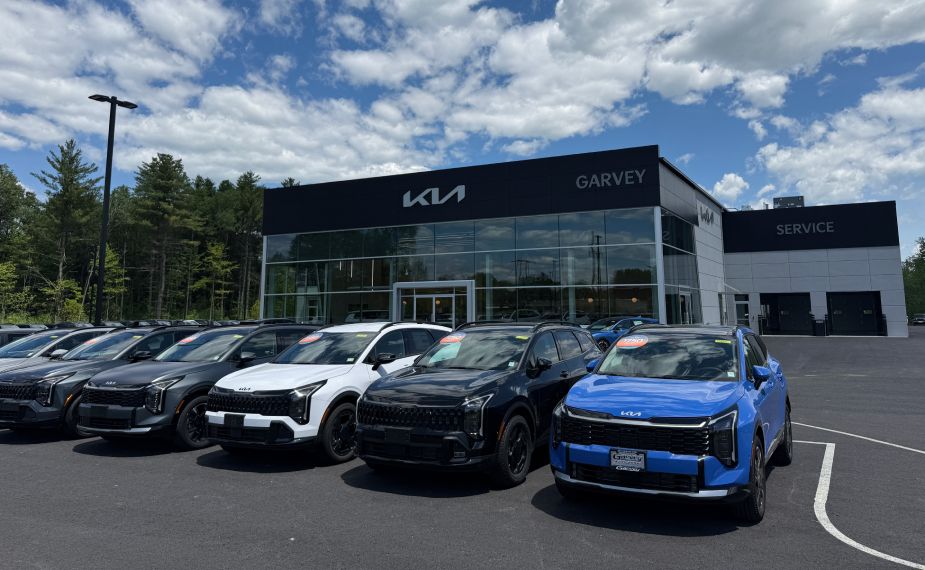
At Garvey Kia, this matters most when shoppers compare similar models side by side and try to understand what each trim actually adds.
LX: the base trim
LX is usually the starting point. On paper, that sounds simple, but buyers often hear “base trim” and assume it means stripped-down. That is not really how modern Kia base trims work. LX is better understood as the version that covers the essentials without loading the vehicle up with extra comfort or styling content. In practical terms, LX is where the vehicle enters the lineup with the core safety and infotainment features buyers expect, while leaving room above it for nicer materials, appearance upgrades, and more convenience features.
Kia LX is not supposed to feel unfinished. It is supposed to feel like the cleanest version of the vehicle: the one that gives you the model itself without pushing you into the higher-cost feature packages.
LXS and S: the first real upgrade
This is where Kia trims start to become more interesting. LXS and S do not mean exactly the same thing, but they often play a similar role. LXS shows up more often on sedans like the K4 and K5. S appears more often on SUVs like the Seltos and Sorento. In both cases, this is usually the point where the vehicle begins to feel less like the entry model and more like a trim that everyday buyers would naturally choose.
Typical differences at this stage often include:
- more convenience features
- more visual polish
- a more complete day-to-day feel
- a clearer separation from the base version
Here is the practical way to read those labels:
| Label | More common on | What it signals |
|---|---|---|
| LXS | Sedans | First step above base with more everyday content |
| S | SUVs | Early feature upgrade with more style and convenience |
The point is not that LXS and S are interchangeable. The point is that they usually mark the moment where a Kia stops feeling like “just the base trim.”
EX: where comfort starts to matter
If there is one trim label that often functions as the center of the lineup, it is EX. Dealer guides and third-party reviews repeatedly treat EX as the value-and-comfort sweet spot, because this is often where Kia starts adding the upgrades people notice every day rather than once in a while. Depending on the model, EX can bring better seat materials, heated seats, power seat adjustment, wireless charging, and a stronger convenience or driver-assistance package.
EX matters more than it sounds. It is not just “the next trim.” It is often the point where a Kia starts to feel more complete in normal ownership. The vehicle is no longer just well-priced; it starts to feel properly equipped.
A useful way to think about it is this:
- LX gives you the basics
- LXS/S gives you the first real upgrade
- EX is where comfort becomes obvious
For many buyers, EX is the trim where the lineup starts making practical sense.
SX and SX Prestige: the premium step
SX usually marks the transition from comfort to premium. On vehicles like the 2026 Sportage, the official trim structure clearly places SX and SX Prestige above EX, indicating what Kia intends those trims to represent. This is where the emphasis shifts toward a richer cabin feel, stronger technology content, and a version of the same vehicle that feels more upscale overall.
SX Prestige takes that logic a step further. If EX is the trim where the vehicle feels well-equipped, SX Prestige is where it begins to feel close to a near-luxury interpretation of the same model.
| Trim | Main role | What the buyer is really choosing |
|---|---|---|
| EX | Comfort/value | A smarter everyday version |
| SX | Premium tech and cabin feel | A more upscale version |
| SX Prestige | Top-end refinement | Most of the available premium equipment |
This is an important distinction because it shows that moving up the lineup is not just about adding random features. It is about changing the vehicle's character.
GT-Line: sporty does not always mean performance
GT-Line is one of Kia’s most misunderstood trim labels. Many buyers see “GT” inside the name and assume it must be the fastest or most performance-focused version. Usually, that is not what GT-Line means. GT-Line is better understood as the sporty branch of the lineup: more aggressive design, sportier trim details, sharper visual attitude, and often a more athletic interior impression.
The clearest example is the 2026 K5. It offers both GT-Line and GT trims, and those two trims don't do the same job. GT-Line gives the sedan a sportier look and feel. GT is the actual performance trim. That difference matters because it shows how Kia uses GT-Line as a design-and-character upgrade rather than automatically turning it into the top-performance version.
So the cleanest way to explain it is:
- GT-Line = sporty style and attitude
- GT = real performance trim, where offered
That single distinction clears up a lot of confusion.
X-Line and X-Pro: the rugged SUV branch
If GT-Line is Kia’s sporty branch, X-Line and X-Pro are its rugged SUV branch. These labels appear on SUVs like the Sportage and Sorento, and the official Kia material makes the difference fairly clear. X-Line is the adventure-styled, AWD-oriented version. X-Pro pushes farther into capability with more off-road-oriented content or hardware.
The simplest way to separate them is:
| Variant | What it changes | Best way to read it |
|---|---|---|
| X-Line | Rugged styling and AWD-oriented identity | Lifestyle-rugged |
| X-Pro | More off-road-focused equipment or tuning | Capability-rugged |
That difference is useful because these trims are not just cosmetic. They change what kind of SUV the model is trying to be. X-Line says “rugged look and all-weather confidence.” X-Pro says “take that idea further.”
A clearer view of Kia’s trim structure makes it easier to narrow the options based on budget, comfort, features, and driving priorities.
How this shows up on real Kia models
The trim logic becomes much easier to understand once you stop treating it as theory and look at actual vehicles.
The K4 is a clear sedan example because it starts at LX, steps into LXS and EX, and then moves into GT-Line and GT-Line Turbo. That shows a normal upward progression from basic to better-equipped to sportier.
The K5 is even more useful because it shows how GT-Line and GT split apart. GT-Line is the sportier-looking version, while GT is the true performance trim. That is one of the best examples in the whole Kia lineup of why the badge alone is not enough — the role of the trim matters.
The Sportage is probably the best all-around example because it carries both kinds of logic at once. It has the normal comfort-and-premium ladder of LX, EX, SX, and SX Prestige, but it also branches into X-Line and X-Pro Prestige. That means one model can show the reader both ideas: how Kia builds upward into premium, and how it also builds sideways into a rugged SUV identity.
The Sorento does something similar in a larger, more family-oriented package. It shows how Kia takes a familiar trim structure and then expands it into more specialized versions without abandoning the basic logic of base, comfort, premium, and rugged branches.
Here is the cleanest model-by-model summary:
| Model | Best trim lesson it teaches |
|---|---|
| K4 | How Kia builds a sedan from base to sporty |
| K5 | Why GT-Line and GT are not the same |
| Sportage | How standard trims and rugged variants can coexist |
| Sorento | How comfort, premium, and rugged trims all branch from one SUV lineup |
Kia trim levels only seem confusing when they are treated as a single universal code. They make more sense when you read them as roles inside the lineup. LX is usually the base. LXS or S is the first meaningful feature step. EX is often the comfort-and-value sweet spot. SX moves toward premium. GT-Line adds sporty character. X-Line and X-Pro create the rugged SUV side of the range.
The real question is not just which trim sits higher. It is what kind of vehicle each trim is trying to turn the model into. Once that clicks, the Kia lineup becomes much easier to read.
If you want to choose the right Kia model for yourself, the team at Garvey Kia can guide you through the options and help you find the trim that fits best.
Categories:
New Inventory